
English
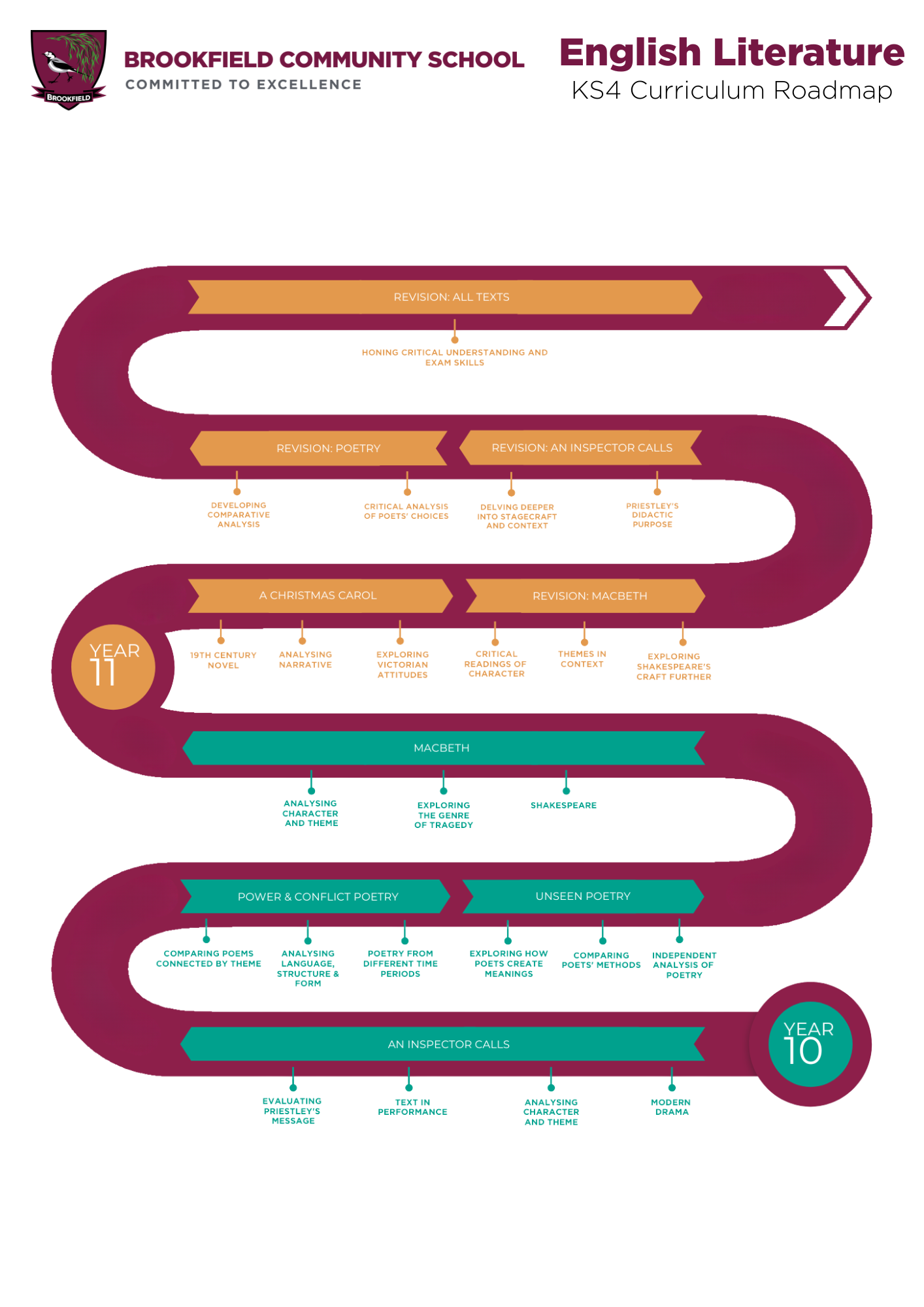
Click the image to view full size.
Introduction to English
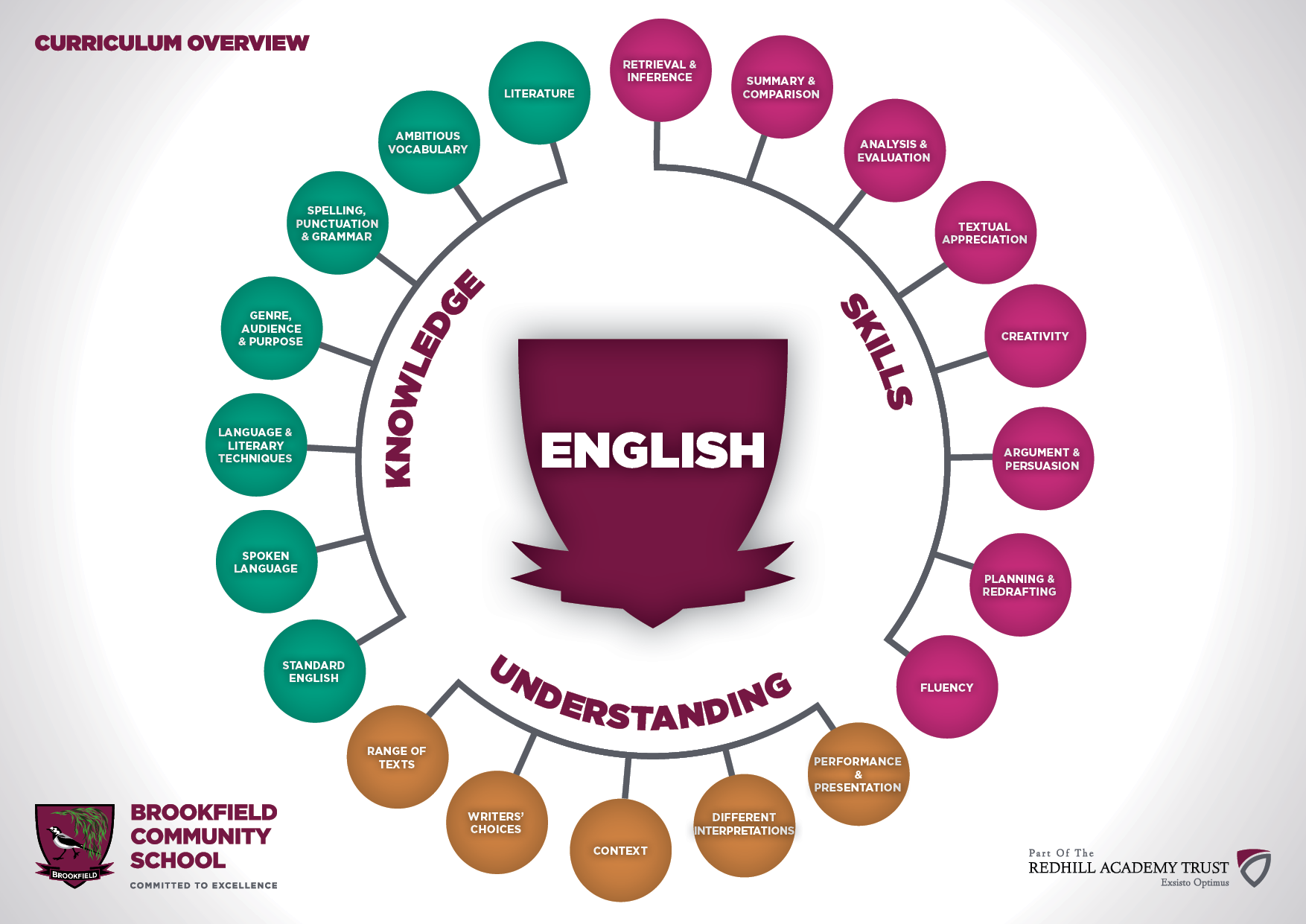
English transcends the classroom; building vital skills for life that enable students to be creative, critical and collaborative as they develop their understanding and experience of the world around them.
Communication is at the heart of everything we do and we passionately believe that students should engage in a rich and diverse curriculum which offers them challenging texts to read, the opportunity to write in a wide variety of genre for a range of audiences and purposes and to explore the power of spoken language. We want them to be able to hear different voices and perspectives; be creative and imaginative and to achieve confidence in their own voice as they gain a wider appreciation of literature and the power of language in its many forms.
Key Stage 3
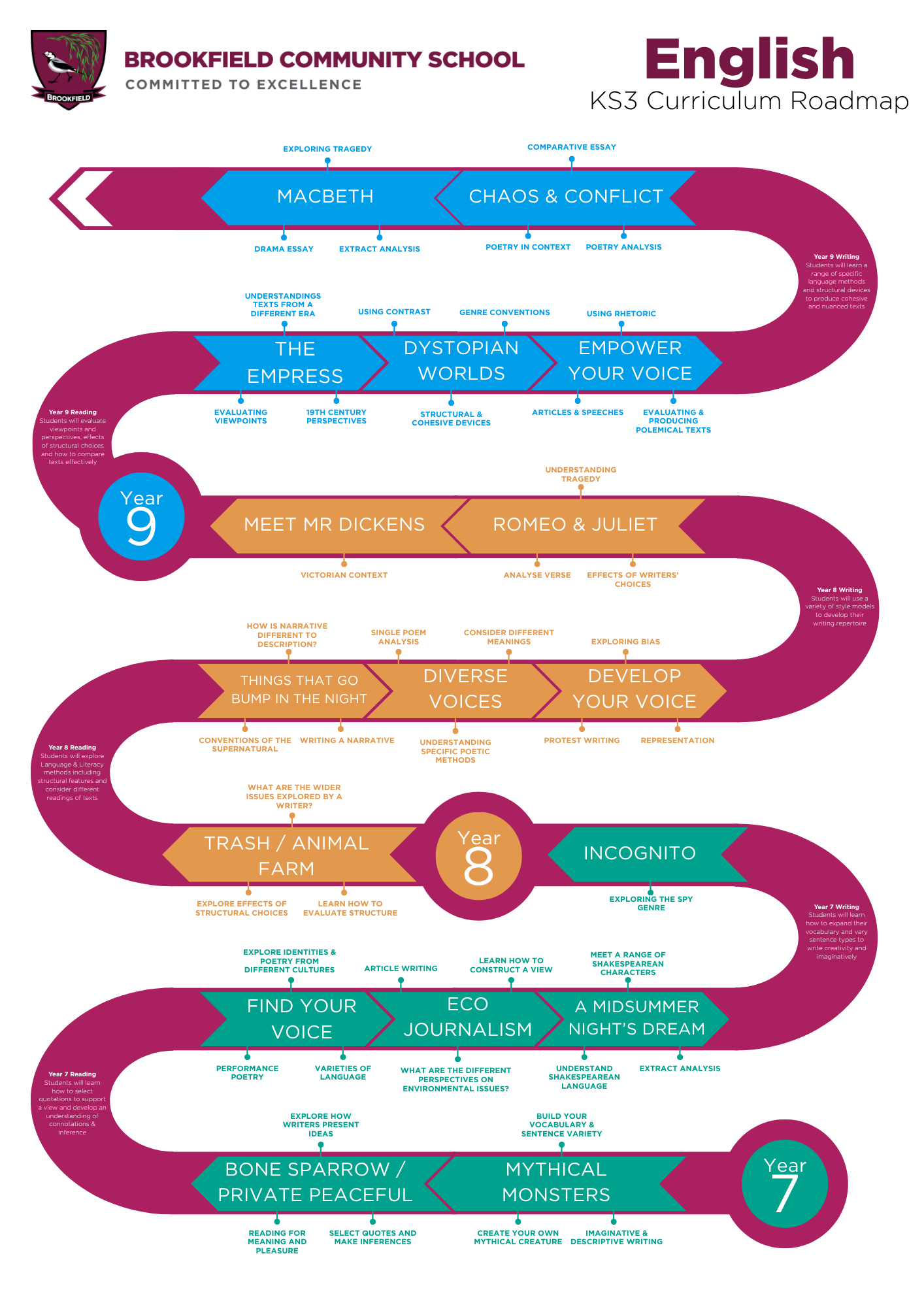
Students have 4 lessons per week at Key Stage 3. In Year 7 and 8, one of these lessons is a dedicated reading lesson in which students follow the Accelerated Reader programme to support continued reading fluency and comprehension. In Year 9, students have at least one lesson per fortnight as a dedicated reading lesson. Some students will continue to follow the Accelerated Reader programme, others will have a DEAL (Drop Everything and Listen) lesson where the teacher will share with them a modern novel, with a continued focus on reading enjoyment and engagement.
Students are taught in broad ability groups, based initially on progress at KS2. These are regularly reviewed to ensure students have the correct level of support to meet their needs, however, all students access the same rich curriculum and opportunities.
Key Stage 4
GCSE English Language
Qualification: GCSE English Language
Exam Board: AQA
The Course (Knowledge, Understanding and Skills)
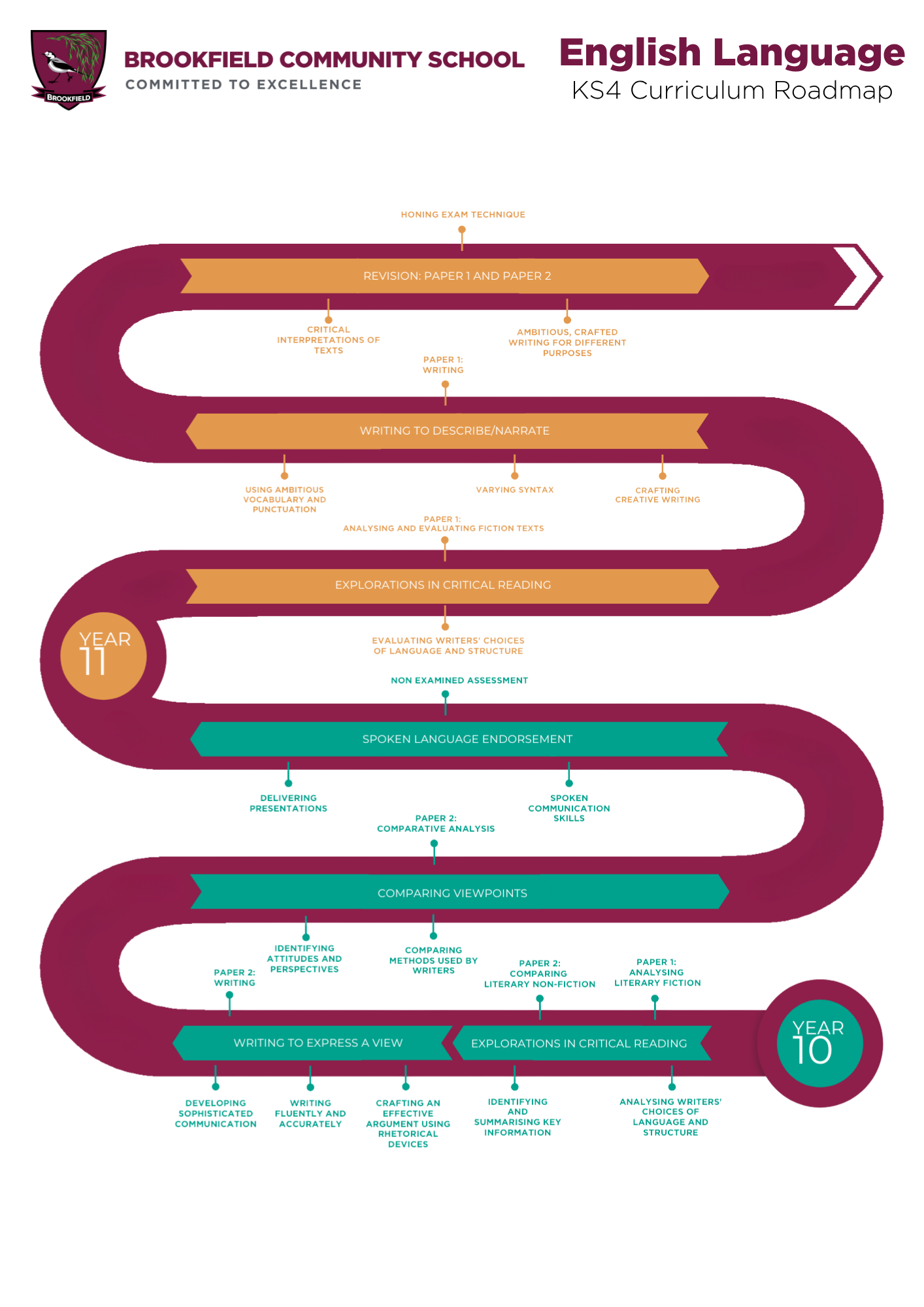
Students’ reading skills and writing skills are assessed throughout the course. We study a range of fiction and literary non-fiction texts to explore how writers structure texts and use language effectively. We also explore different writers’ viewpoints and how these are conveyed. For writing, we focus on how to construct engaging descriptions and narratives and how to express a viewpoint effectively. Students also complete a Spoken Language Endorsement which is reported alongside their GCSE grade in the subject.
How you are assessed
Assessment is through 100% exam. Students sit two exam papers:
Paper 1: 50% (1 hour 45 mins)
Section A: Reading – students have one literary fiction text to read and respond to.
Section B: Writing – students have a choice of two questions to describe or narrate with a picture stimulus connected to one option.
Paper 2: 50% (1 hour 45 mins)
Section A: Reading – students have two non-fiction texts to read and respond to.
Section B: Writing – students have one question, linked in theme to the reading texts, and are asked to express their viewpoint to respond to a statement about a topical issue in a specific genre.
Spoken Language Endorsement
This is a separate assessment graded as a pass, merit or distinction. Students deliver a 3-5 minute speech on a topic of their choice and then respond to questions on the topic.
GCSE English Literature
Qualification: GCSE English Literature
Exam Board: AQA
The Course (Knowledge, Understanding and Skills)
We want students to develop a love of the literature they study. Over the course, they will study poetry, prose and drama and learn to appreciate writers’ craft and what may have influenced them in their writing. We explore layers of meaning within the texts and how different audiences may respond to their work.
How you are assessed
Assessment is through 100% exam. Students sit two exam papers:
Paper 1: 40% (1 hour 45 mins)
Section A: Shakespeare – Macbeth
Section B: 19th Century Literature – A Christmas Carol by Charles Dickens
Paper 2: 60% (2 hour 15 mins)
Section A: Modern texts – An Inspector Calls by J.B. Priestley
Section B: Poetry anthology – a selection of poems on the theme of Power and Conflict
Section C: Unseen poetry – students need to analyse one unseen poem and then compare the methods the writers use in this poem with those used in a second unseen poem
Key Stage 5
We teach two A-level examinations: AQA English Language and AQA English Literature Specification B.
A Level English Language
Qualification: A level English Language
Exam Board: AQA
The Course (Knowledge, Understanding and Skills)
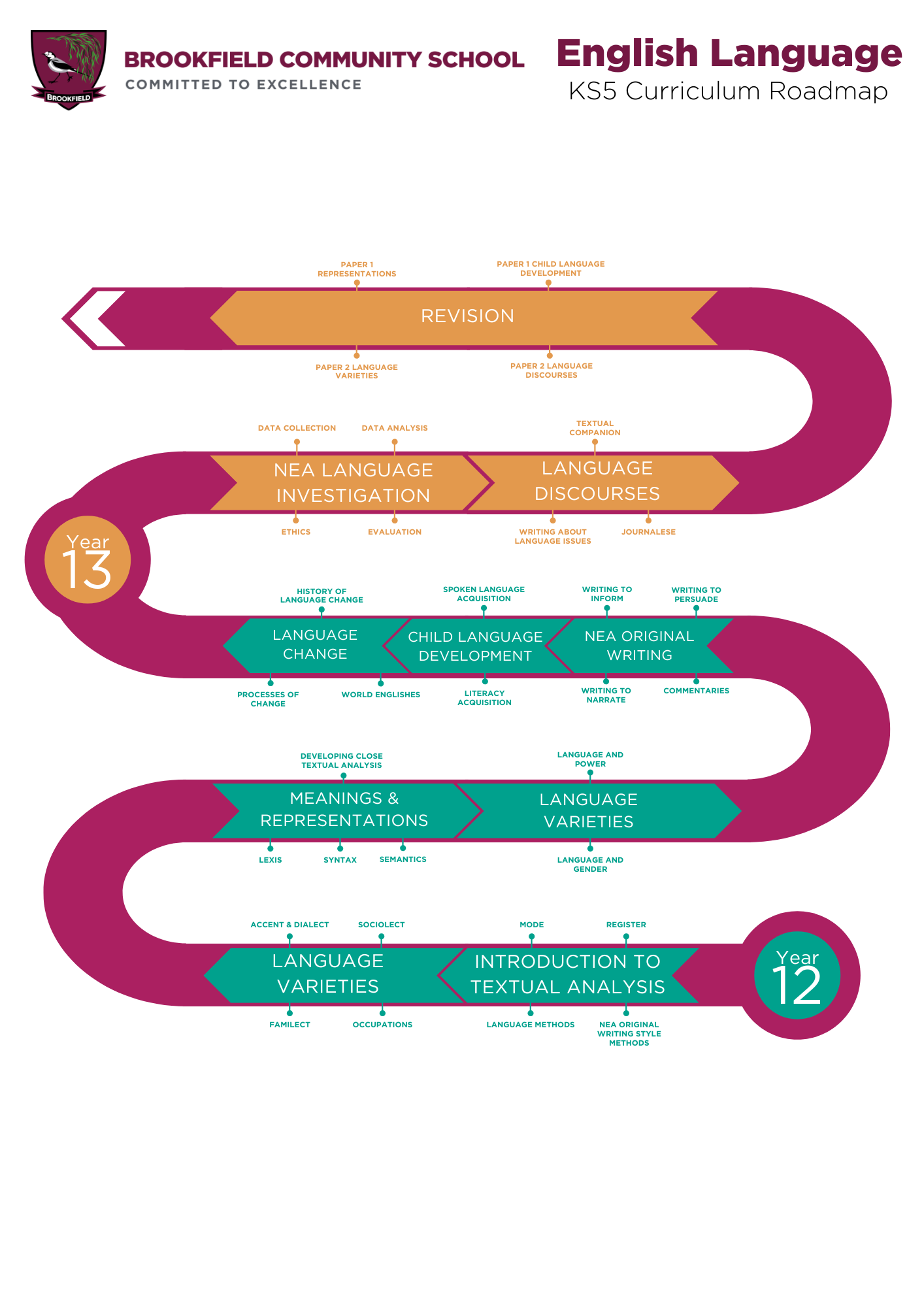
We explore how language works in lots of different contexts, analysing a range of written, spoken and multimodal texts and engaging with language discourses and debates. Students study different language varieties from accents and dialects to teen slang and World Englishes, alongside an understanding of how and why language changes. We deconstruct different genre of writing and learn how to write effectively in different forms. We also study how children learn to speak and develop literacy skills from birth to approximately eleven years of age and the theories of language acquisition.
How you are assessed
There are two exams (worth 80%) and a coursework component (worth 20%):
Paper 1: Language, the Individual and Society (2 hours 30 minutes, worth 40%)
Students are given two unseen texts, linked by topic, from two different time periods. They analyse each text to explore how the language constructs meanings and representations and then compare the language used in the two texts. For Section B, Child Language Development, students are provided with a choice of two questions, one with spoken and one with written or multimodal data and are asked to evaluate a theoretical perspective of child language acquisition, using the data to support their views.
Paper 2: Language Diversity and Change (2 hours 30 minutes, worth 40%)
For Section A, students write an evaluative essay on language diversity or language change. For Section B, students need to analyse two texts, exploring the way the writers have conveyed their linguistic views and then produce a directed writing task linked to the same topic, using the ideas in the texts.
Non-exam assessment: Language in Action (worth 20%)
The coursework element is composed of a language investigation (2,000 words excluding data) based on an individual area of interest and a piece of original writing with an accompanying commentary (1,500 words).
A Level English Literature
Qualification: A level English Literature
Exam Board: AQA (Specification B)
The Course (Knowledge, Understanding and Skills)
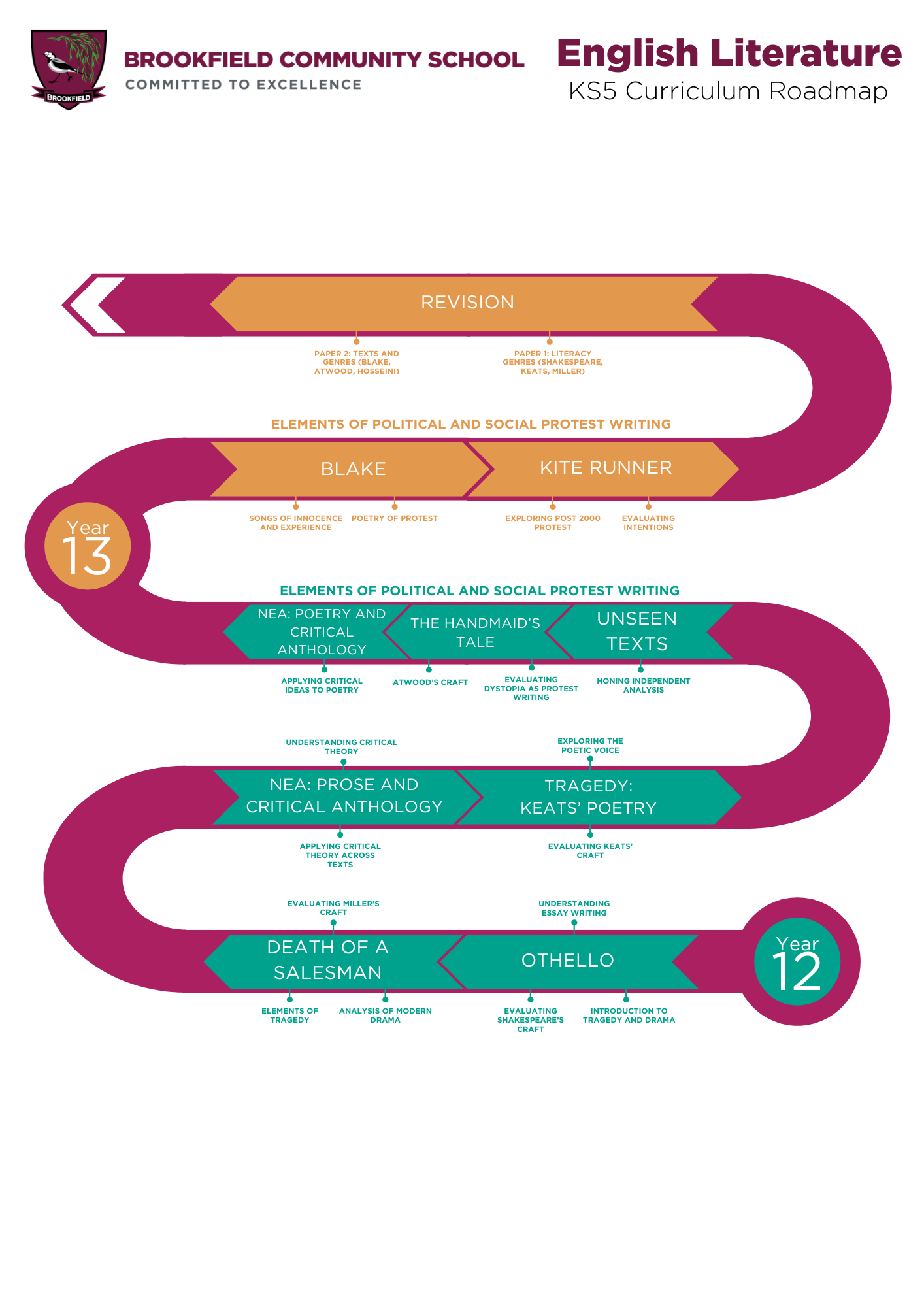
A range of literary texts is studied in depth, exploring specific genres and engaging with a number of theoretical ideas. There will be opportunities to write about texts in different ways and scope for pursuing areas of personal interest through the coursework component. Currently, our students explore the following texts for the examinations: ‘Othello’ by William Shakespeare, John Keats’ poetry, ‘Death of a Salesman’ by Arthur Miller, ‘The Handmaid’s Tale’ by Margaret Atwood, ‘The Kite Runner’ by Khaled Hosseini and ‘The Songs of Innocence and Experience’ by William Blake.
How are students assessed?
There are two exams (worth 80%) and a coursework component (worth 20%):
Paper 1: Literary Genres (2 hours 30 minutes, worth 40%)
Three texts are studied from the genre of tragedy: one Shakespeare text, a second drama text and one further text. The examination requires responses to two tasks based on the Shakespeare text and then a further essay in which the other two set texts are linked.
Paper 2: Texts and Genres (3 hours, worth 40%)
Literary texts taken from political and social protest writing are the focus of this paper. Three texts are studied: one post-2000 prose text, one poetry and one further text. The examination consists of one compulsory question on an unseen passage, one essay question about one of the set texts and one essay about the other two set texts that explores the connections between them.
Non-exam assessment: Theory and Independence (worth 20%)
In this component, two different literary texts are explored. One of the texts must be a poetry text and the other must be prose. The study of each text will be informed by a Critical Anthology produced by AQA. This means that the literature might be approached through the lens of feminism, Marxism or ecocriticism. Two essays of 1250 -1500 words are completed, each responding to a different text and linking to a different aspect of the Critical Anthology.
Enrichment
Our curriculum intertwines knowledge, skills and understanding with real world opportunities to apply this through creative competitions, embracing challenge and celebrating success.
Competitions that we have been involved in include:
- Poetry by Heart (national finalists at KS3 in 2025 and 2023)
- Rotary Club Public Speaking competition (winner 2025)
- Mock Trial (national winners in 2025 and 2024)
- Cambridge Ovid competition celebrating the Greek myths (winner in the Artefacts class and runner up in the Creative class 2025)
- Foyles Young Poet competition
- Various creative writing competitions through our Creative Writing Club
- Reading competitions
We also offer theatre trips to see texts in performance and conferences to support GCSE and A level students. To support independent enrichment, students also have access to Massolit, an online platform of video lectures from university professors and subject specialists.
Every year we celebrate World Book Day with a range of in school activities including literary themed dressing up, author hunts, games, quizzes and shared stories. Readathon runs every year with Year 7 and 8 and we hold a book fair at least once a year.
Progression Opportunities
English is a key subject for progression into all post 16 courses. It also leads to a wide variety of university degrees and career opportunities, encouraging students to explore challenges creatively, respond sensitively and empathetically to others and to read the world critically and thoughtfully.
Studying English could be a student’s ticket to a career as an educator, writer, editor, journalist or any number of exciting occupations that rely on their use of the written and spoken word. The skills they will gain whilst studying English may apply in a wide range of education, business, and professional settings and are highly regarded for most pathways.