
Science

Click image to view full size.
Introduction to Science
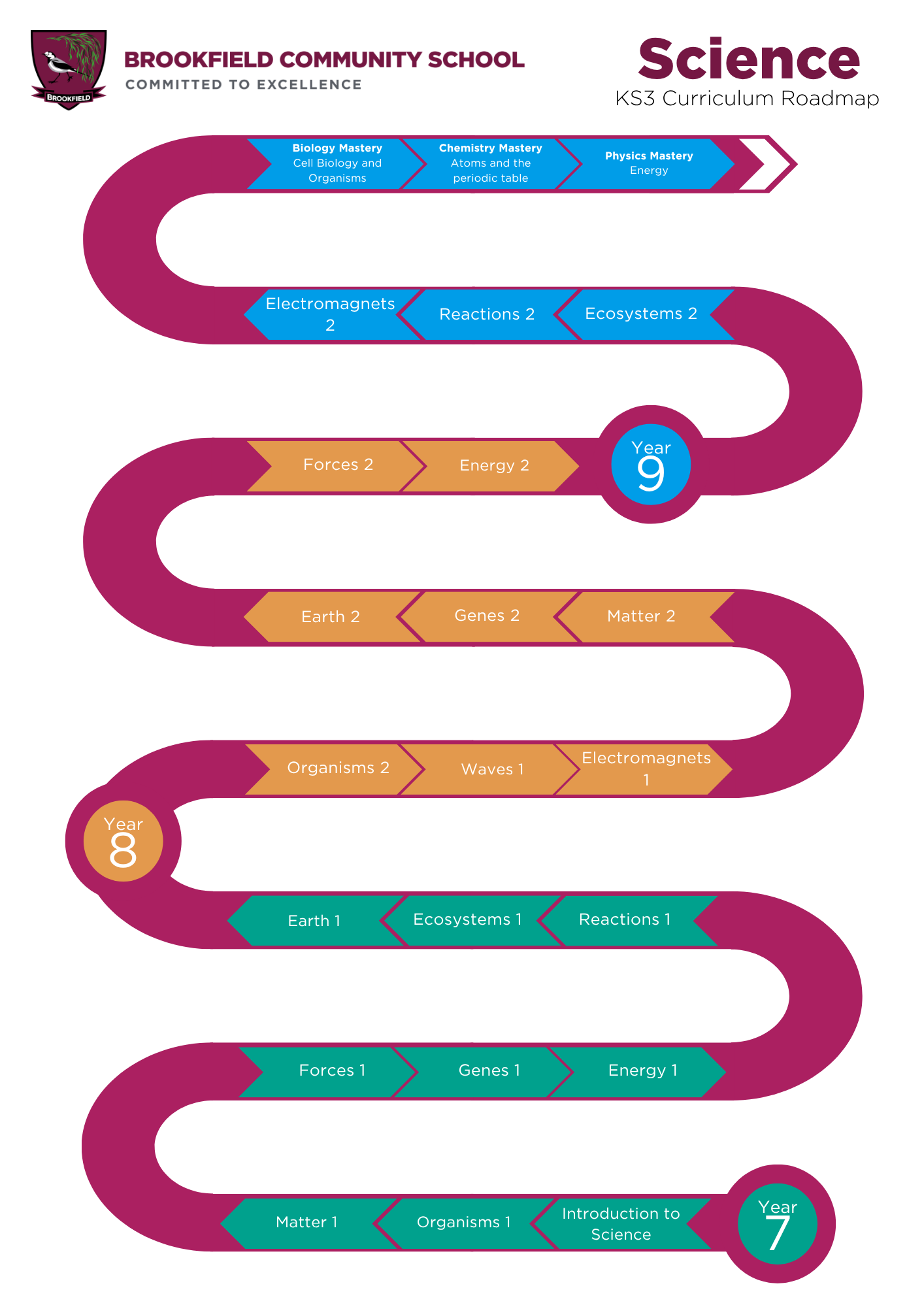
We believe that students should experience a broad and ambitious Science curriculum, rich in skills, knowledge and understanding, which helps them appreciate Science in their everyday lives and prepares them well for future learning or employment. Supporting all students to become scientifically literate participants in society. Our intent is to deliver an inspiring and memorable Science curriculum. We aim to provide a challenging, productive, safe and enjoyable working environment. Students will experience a balance of activities within the curriculum, which cover aspects of Biology, Chemistry, Physics and the scientific process. As the students move through the courses, they are accumulating the knowledge and skills necessary for academic success whilst fostering an interest in Science and its role in the world around us.
Key Stage 3
The students study three lessons a week of Science. Each year group is split into two halves, within each half year there are three classes. In year 7 and 8, classes are taught science in their learning groups and there is no ‘setting’. In year 9, there are some aspects of setting in each half year with one faster working class and two mixed classes of students. The students cover the Key Stage Three National Curriculum for Science which give students a broad experience of all three disciplines within the Science subject. There is also scope for our students to develop their science investigative skills across the three years of Key Stage Three. Science is the systematic study of the physical and natural world.
Key Stage 4
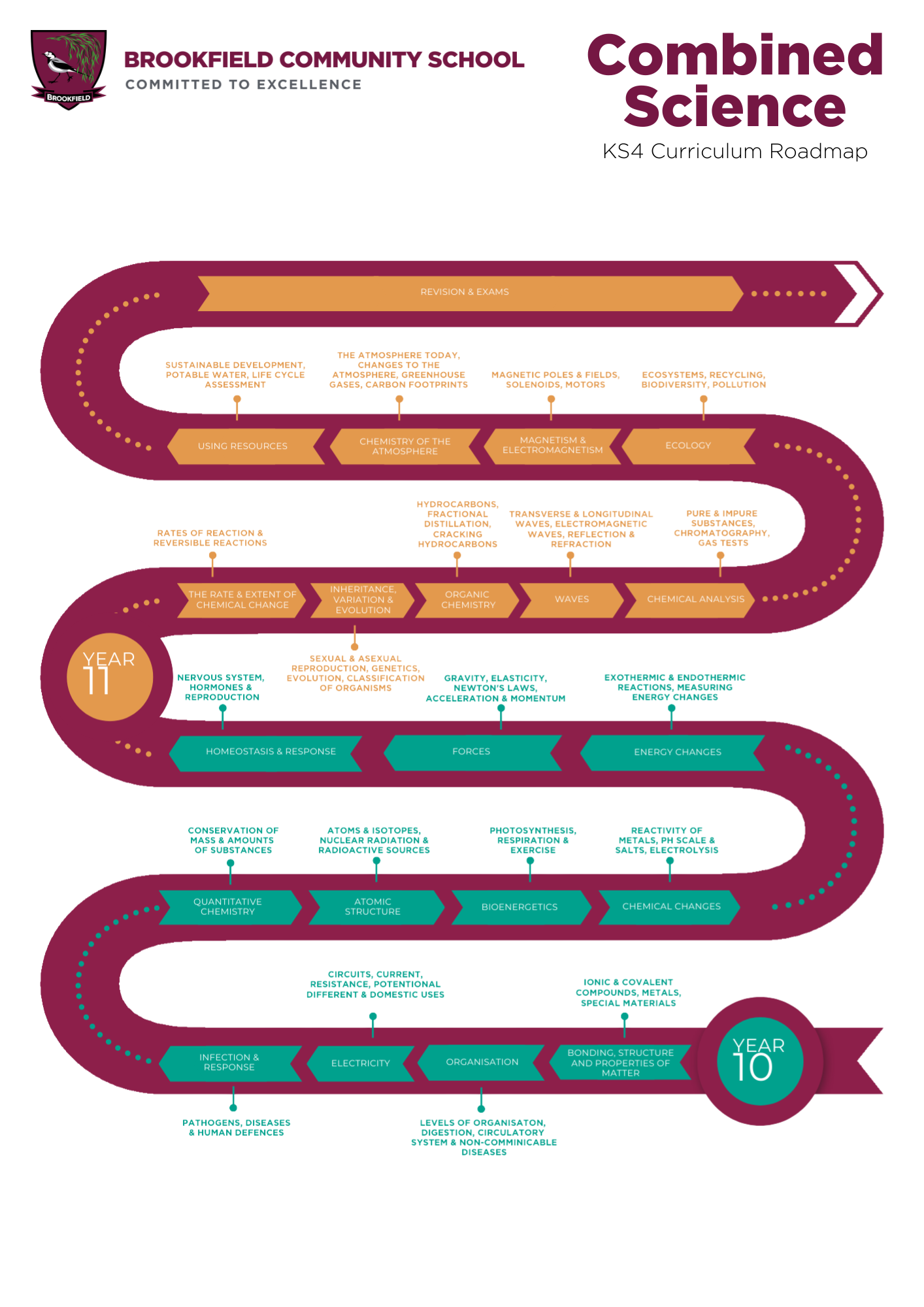
GCSE Combined Science (Trilogy)
Exam Board: AQA
The Course
Science is the systematic study of the physical and natural world through observation and experimentation.
Teaching in science in Key Stage 4 continues with the process of building upon and deepening scientific knowledge and the understanding of ideas developed in earlier key stages in the subject disciplines of biology, chemistry and physics. Throughout the course there is a focus on ‘Working Scientifically’, with students challenged to develop thinking, practical and analytical skills crucial to the application of Science in real world contexts.
Science is changing our lives and is vital to the world’s future prosperity, all students need to be taught essential aspects of the knowledge, methods, processes and uses of science.
The Biology topics covered are;
-
Cell biology
-
Organisation
-
Infection and response
-
Bioenergetics
-
Homeostasis and response
-
Inheritance, variation and evolution
-
Ecology
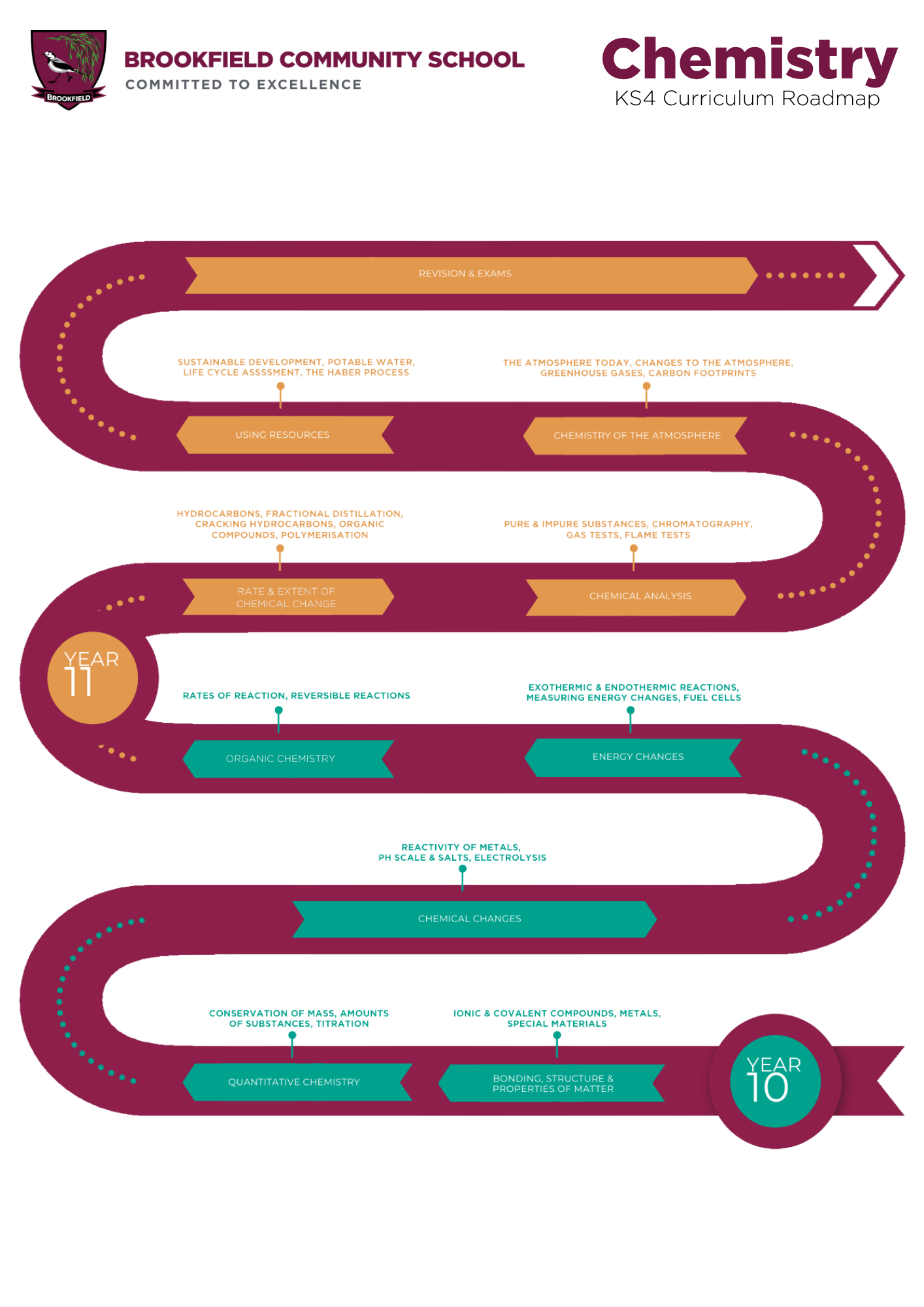
The Chemistry topics covered are;
-
Atomic structure and the periodic table
-
Bonding, structure, and the properties of matter
-
Quantitative chemistry
-
Chemical changes
-
Energy changes
-
The rate and extent of chemical change
-
Organic chemistry
-
Chemical analysis
-
Chemistry of the atmosphere
-
Using resources
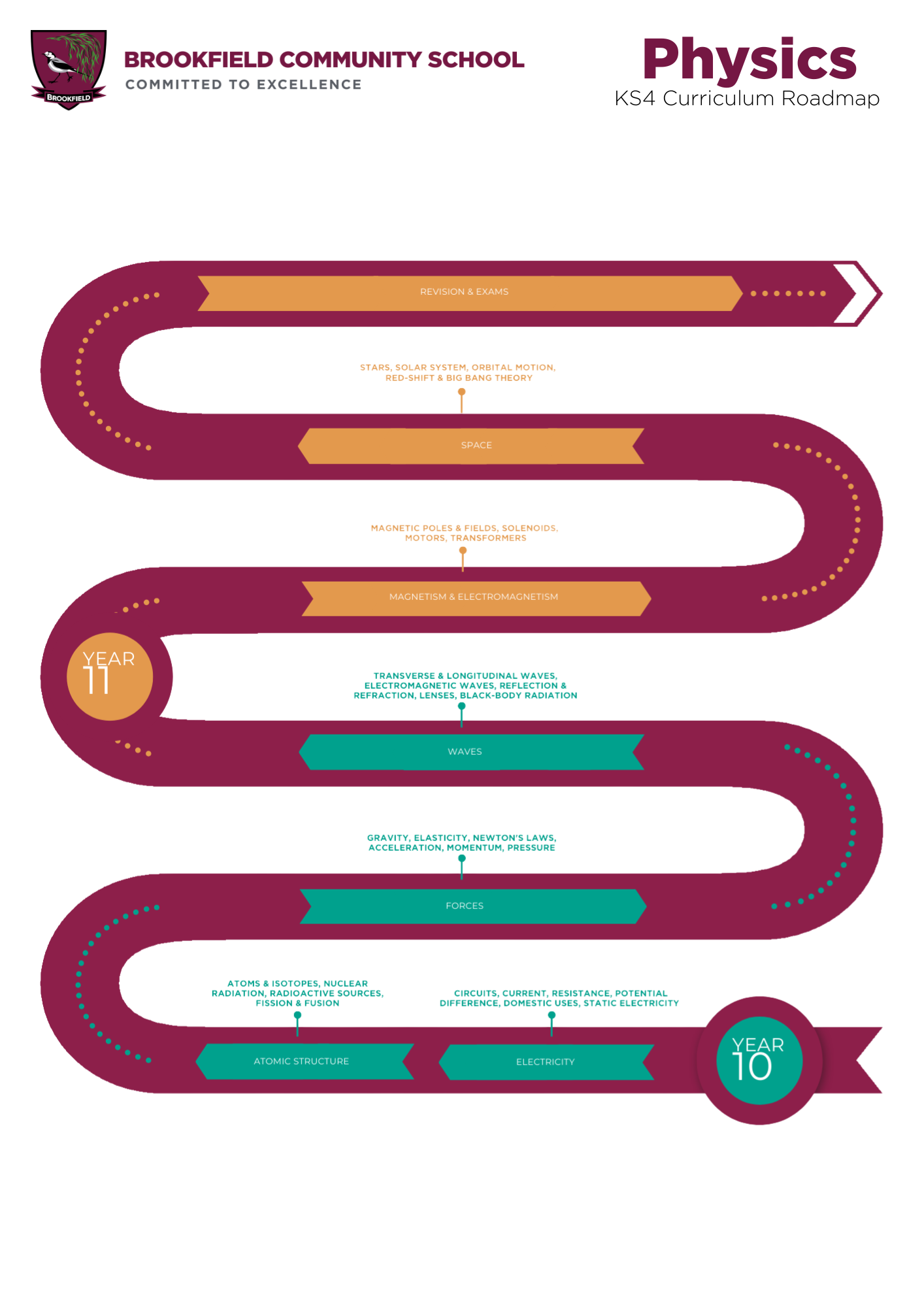
The Physics topics covered are;
-
Energy
-
Electricity
-
Particle model of matter
-
Atomic structure
-
Forces
-
Waves
-
Magnetism and electromagnetism
How are students assessed?
There are six exam papers: two biology, two chemistry and two physics. All the exam papers are 1 hour and 15 min long and account for 16.7% of the final mark. Questions can be multiple choice, structured, closed short answer, and open response.
GCSE Biology
Exam Board: AQA
The Course
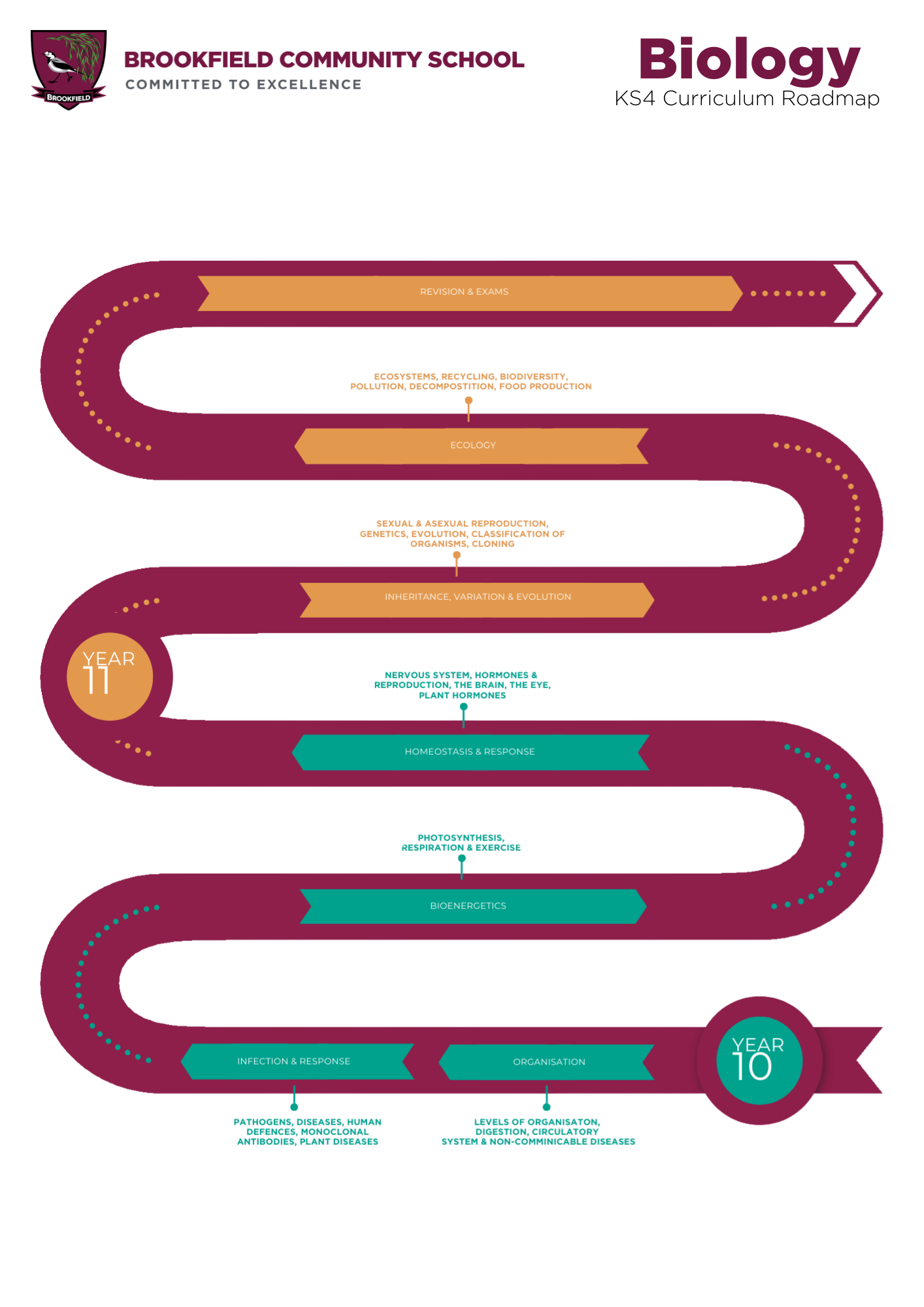
GCSE Biology is the study of living organisms and their structure, life-cycles, adaptations and environment.
Teaching in Biology continues with the process of building upon and deepening scientific knowledge and the understanding of ideas developed in earlier key stages. Throughout the course there is a focus on ‘Working Scientifically’, with students challenged to develop thinking, practical and analytical skills crucial to the application of Biology in real world contexts.
The topics covered are;
-
Cell biology
-
Organisation
-
Infection and response
-
Bioenergetics
-
Homeostasis and response
-
Inheritance, variation and evolution
-
Ecology
How are students assessed?
There are two exam papers. All the exam papers are 1 hour and 45 min long and account for 50% of the final mark. Questions can be multiple choice, structured, closed short answer, and open response.
GCSE Chemistry
Exam Board: AQA
The Course
Chemistry is the study of the composition, behaviour and properties of matter, and of the elements of the Earth and its atmosphere.
Teaching in Chemistry continues with the process of building upon and deepening scientific knowledge and the understanding of ideas developed in earlier key stages. Throughout the course there is a focus on ‘Working Scientifically’, with students challenged to develop thinking, practical and analytical skills crucial to the application of Science in real world contexts.
The topics covered are;
-
Atomic structure and the periodic table
-
Bonding, structure, and the properties of matter
-
Quantitative chemistry
-
Chemical changes
-
Energy changes
-
The rate and extent of chemical change
-
Organic chemistry
-
Chemical analysis
-
Chemistry of the atmosphere
-
Using resources
How are students assessed?
There are two exam papers. All the exam papers are 1 hour and 45 min long and account for 50% of the final mark. Questions can be multiple choice, structured, closed short answer, and open response.
GCSE Physics
Exam Board: AQA
The Course
Physics is the study of energy, forces, mechanics, waves, and the structure of atoms and the physical universe.
Teaching in Physics continues with the process of building upon and deepening scientific knowledge and the understanding of ideas developed in earlier key stages. Throughout the course there is a focus on ‘Working Scientifically’, with students challenged to develop thinking, practical and analytical skills crucial to the application of Science in real world contexts.
The topics covered are;
-
Energy
-
Electricity
-
Particle model of matter
-
Atomic structure
-
Forces
-
Waves
-
Magnetism and electromagnetism
-
Space physics
How are students assessed?
There are two exam papers. All the exam papers are 1 hour and 45 min long and account for 50% of the final mark. Questions can be multiple choice, structured, closed short answer, and open response.
Key Stage 5
A Level Biology
Exam Board: AQA
The Course
The OCR (A) A Level Biology course provides an in-depth exploration of the fundamental concepts that govern biological systems, from molecular and cellular levels to whole organisms and ecosystems. Students develop comprehensive knowledge in areas such as genetics, evolution, biodiversity, physiology, and biochemistry, helping them understand the interconnected nature of life processes. The course places a strong emphasis on scientific understanding and the application of biological theories to real-world contexts, such as medicine, conservation, and biotechnology. In addition to theoretical learning, students build essential practical skills by conducting experiments, analyzing data, and evaluating scientific methods, which are embedded throughout the course and assessed through both written exams and a practical endorsement. These combined elements of knowledge, understanding, and scientific literacy equip students with the critical thinking, problem-solving, and investigative skills necessary for further study and careers in the life sciences.
The OCR (A) Biology A Level is split into 6 modules:
-
Module 1: Development of practical skills in biology
-
Module 2: Foundations in biology (cell structure, biological molecules, nucleotides & nucleic acids, enzymes, membranes, cell division etc)
-
Module 3: Exchange and transport (exchange surfaces; transport in animals & plants)
-
Module 4: Biodiversity, evolution and disease (communicable diseases, immune system; biodiversity; classification & evolution)
-
Module 5: Communication, homeostasis and energy (homeostasis; neuronal/hormonal communication; plant & animal responses; photosynthesis; respiration)
-
Module 6: Genetics, evolution and ecosystems (cellular control; inheritance patterns; manipulating genomes; cloning & biotechnology; ecosystems; populations & sustainability)
Throughout the course students develop knowledge and understanding of biological concepts, and also practical skills (planning, implementing, analysing, evaluating experiments) and mathematical/graphical skills in a biological context.
How are students assessed?
For the full A Level: three written examination papers plus a Practical Endorsement (non-exam assessment) component.
-
Paper 1: Biological processes (100 marks; 2 h 15 m; ~37% weighting)
-
Paper 2: Biological diversity (100 marks; 2 h 15 m; ~37% weighting)
-
Paper 3: Unified Biology (70 marks; 1 h; ~26% weighting)
-
Practical Endorsement: teacher-assessed practical skills (minimum of 12 practical activities) – this is reported separately and does not count towards the A-Level grade, but is required to complete the qualification.
A Level Chemistry
Exam Board: AQA
The Course
The OCR (A) A Level Chemistry course offers a comprehensive exploration of the fundamental principles that govern chemical phenomena. Students develop a deep knowledge of physical, inorganic, and organic chemistry, gaining insight into atomic structure, bonding, energetics, kinetics, and chemical equilibrium. The course emphasizes understanding the patterns and trends in the periodic table, the mechanisms of organic reactions, and the role of chemistry in real-world applications such as pharmaceuticals and environmental science. Alongside theoretical knowledge, students build essential practical skills through hands-on experiments, data analysis, and the evaluation of scientific methods. This combination of understanding and applied skill prepares learners for further study in scientific fields and develops their ability to think critically and solve complex problems.
The OCR (A) Chemistry A Level is split into 6 modules:
-
Module 1: Development of practical skills in chemistry
-
Module 2: Foundations in chemistry (atomic structure, isotopes, chemical formulae & equations, amount of substance, acid-base and redox reactions, bonding structure).
-
Module3: Periodic table and energy (periodicity, group 2, halogens, qualitative analysis, enthalpy changes, reaction rates and equilibrium).
-
Module 4: Core organic chemistry (basic organic concepts, hydrocarbons, alcohols & haloalkanes, organic synthesis, analytical techniques).
-
Module 5: Physical chemistry and transition elements (reaction rates & equilibrium (quantitative), pH & buffers, enthalpy, entropy & free energy, redox & electrode potentials, transition metals).
-
Module 6: Organic chemistry and analysis (aromatic compounds, carbonyls, carboxylic acids & esters, nitrogen compounds, polymers, organic synthesis, chromatography & spectroscopy).
Throughout the course students will develop knowledge and understanding of chemical concepts (physical, inorganic and organic chemistry), mathematics and data skills in a chemical context, plus practical skills of planning, implementing, analysing, and evaluating experiments.
How are students assessed?
For the full A Level: three written examination papers plus a Practical Endorsement (non-exam assessment) component.
-
Paper 1: Periodic Table, Elements and Physical Chemistry (100 marks; 2 h 15 m; ~37% weighting)
-
Paper 2: Synthesis and Analytical Techniques (100 marks; 2 h 15 m; ~37% weighting)
-
Paper 3: Unified Chemistry (70 marks; 1 h; ~26% weighting)
-
Practical Endorsement: teacher-assessed practical skills (minimum of 12 practical activities) – this is reported separately and does not count towards the A-Level grade, but is required to complete the qualification.
A Level Physics
Exam Board: AQA
The Course
The OCR (A) A Level Physics course offers a thorough study of the principles and laws that govern the physical universe, from classical mechanics to modern physics. Students gain detailed knowledge in areas such as motion, forces, energy, electricity, magnetism, waves, thermodynamics, quantum physics, and nuclear physics. The course emphasizes not only understanding these concepts but also applying them to solve real-world problems and analyse complex systems. Practical skills are integral, with students developing competence in designing experiments, collecting and interpreting data, and evaluating experimental methods, all of which are assessed through both exams and a practical endorsement. By combining theoretical knowledge with hands-on investigation, the course fosters critical thinking, problem-solving, and analytical skills, preparing learners for further study in physics or other STEM-related fields.
The OCR (A) Physics A Level is split into 6 modules:
-
Module 1: Development of practical skills in physics
-
Module 2: Foundations in physics (physical quantities and units, making measurements & analysing data, nature of quantities).
-
Module 3: For/ces and motion (motion, forces in action, work/energy/power, materials, Newton’s laws & momentum).
-
Module 4: Electrons, waves and photons (charge & current, energy/power/resistance, electrical circuits, waves, quantum physics).
-
Module 5: Newtonian world and astrophysics (thermal physics, circular motion, oscillations, gravitational fields, astrophysics/cosmology).
-
Module 6: Particles and medical physics (capacitors, electric fields, electromagnetism, nuclear & particle physics, medical imaging).
Students gain theoretical understanding of key physics concepts (mechanics, electricity, waves, particles, fields, astrophysics), mathematical skills applied to physics, data-analysis and experimental skills via required practicals.
How are students assessed?
For the full A Level: three written examination papers plus a Practical Endorsement (non-exam assessment) component.
-
Paper 1: Modelling physics (100 marks; 2 h 15 m; ~37% weighting)
-
Paper 2: Exploring physics (100 marks; 2 h 15 m; ~37% weighting)
-
Paper 3: Unified physics (70 marks; 1 h; ~26% weighting)
-
Practical Endorsement: teacher-assessed practical skills (minimum of 12 practical activities) – this is reported separately and does not count towards the A-Level grade, but is required to complete the qualification.
Enrichment
To support the KS3 Science curriculum there are many opportunities to relate Science to the wider world. At Brookfield we celebrate the National Science week by having many extra-curricular activities going on such as a nature photography competition, fantastic demonstrations afternoon and ‘get hands on’ with Science session afterschool. There is also an engaging science trip to understand more about animal adaptations for Year 8, a competition with a local enterprise United Cast Bar for Year 7 and a space demonstration day for Year 9 students.
To support KS4 Science students we run a weekly afterschool drop-in session where students can access help and support with their GCSE Science work from science teachers.
In A Level Chemistry we have developed excellent links with local universities and this gives us the opportunity for our students to experience practical visits to university laboratories synthesising drugs such as Aspirin and Paracetamol and analysing these compounds with cutting edge instrumentation. We also take part in competitions such as the Chemistry Olympiad and Schools Analyst of the Year through our affiliation with the Royal Society of Chemistry.
In A Level Biology we have visited a local university to take part in their taster day where students completed laboratory work looking at DNA synthesis and blood sample analysis, as well task experiencing a university lecture.
Y12 Biologists take part in a two-day fieldwork to investigate the effect of environmental factors on the distribution of different species in the local environment.
In A Level physics students have the opportunity to visit the local observatory to use the telescope and widen their knowledge of space physics.
We are always looking for opportunities to bring our school learning into a real-life context.
Progression Opportunities
Biology
Many people use an A-Level in Biology in their future studies or work. Even if students don’t decide to work in biology, studying it still develops useful and transferable skills for other careers. Students will develop research, problem solving and analytical skills, alongside teamwork and communication. Universities and business regard these very highly.
Here are some possible degrees options after studying A Level Biology:
Biology, Psychology, Sport and exercise science, Medicine, Anatomy, Physiology and pathology pharmacology, Toxicology and pharmacy chemistry. This list is by no means exhaustive. Biology can prove useful for a wide variety of degree courses.
Chemistry. It would be easy to list many jobs or careers in which a Chemistry qualification plays a vital role; Analytical chemist , Chemical engineer, Clinical biochemist, Pharmacologist, Doctor, Dentist, Vet, Research scientist (physical sciences), Toxicologist, Chartered certified accountant, Environmental consultant, the list could take many pages. Perhaps more importantly is the fact that our world is very much a material world and as such, every material or product involves some aspect of Chemistry and hence a job opportunity. There are many very surprising areas that a Chemist may find themselves working in. In addition to this, the skills developed are recognised across many non-scientific areas such as finance, advertising, planning, logistics and so on. A chemistry qualification really is a foot in many doors.
Physics can be one of the most important qualifications for a great many careers.
Studying physics can open the door to a variety of jobs. The jobs below give an indication of the sorts of jobs for which Physics may be an advantage.
Aeronautical Engineer, Agricultural Scientist, Air-Traffic Controller, Architect, Army, Astronomer, Audiologist, Automobile Engineer, Biomedical Engineer, Biophysicist, Building technologist, Civil Service, Scientific Officer, Computer-aided Design, Computer Programmer, Dental Technician, Dentist, Doctor, Draughts Person, Electrical Engineer, Electrician, Electronics Engineer, Environmental Health Officer, Ergonomicist, Flight Engineer, Forensic Scientist, Geophysicist, Health and Safety Officer, Industrial Designer, Information Scientist, Laboratory Technician, Lighting Technologist, Marine Scientist, Materials Scientist, Mechanical engineer, Medical Physicist, Metallurgist, Engineer and Radio Officer, Meteorologist, Mining engineer, Motor Mechanic, Nuclear Scientist, Optician, Patent agent, Physicist, Physiotherapist, Pilot, Production Engineer, Quantity Surveyor, Radiographer, Radio Station Manager, Recording engineer, Royal Air Force, Royal Navy, Space Scientist, Structural engineer, Systems analyst, Teacher.